A study conducted by experts at the Stockholm Environment Institute Tallinn Centre (SEI Tallinn) has identified opportunities to improve waste sorting and recycling on passenger vessels and in port terminals along the Tallinn–Helsinki route. The study supports the FIN-EST Green Corridor initiative, which aims to make maritime transport between Estonia and Finland more sustainable. The study is available on the FIN-EST Green Corridor webpage https://www.ts.ee/wp-content/uploads/2026/02/Fin-Est-Green-Corridor_Waste-study_SEI-Tallinn-17.02.2026_FINAL.pdf
Building on earlier mapping of stakeholders and existing waste management practices, SEI Tallinn analyzed waste streams, recycling opportunities and differences in sorting systems between Estonia and Finland. The study highlighted the potential to increase recycling by improving waste separation at source and reducing the amount of recyclable materials ending up in mixed waste.
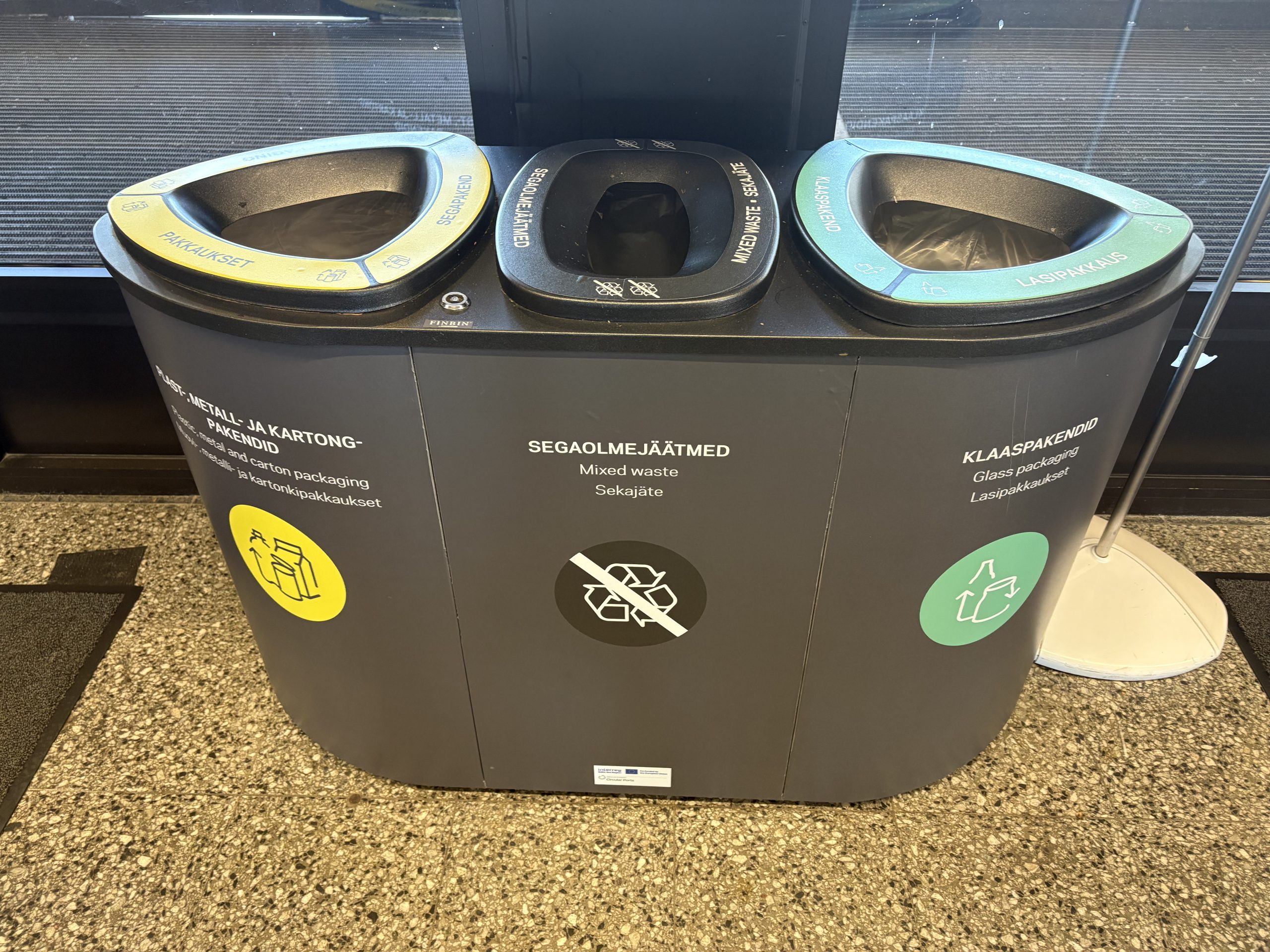
Based on its findings, SEI Tallinn recommended harmonizing waste sorting practices in passenger areas on vessels and in terminals at both the Port of Tallinn and the Port of Helsinki and both cities. The recommendations include introducing common waste categories, colour codes, pictograms and sorting labels, as well as replacing mixed-waste-only bins with multi-compartment sorting bins. Clear passenger information, staff guidance and cooperation between ports, shipping companies and waste management operators were also highlighted as important for successful implementation.
The recommendations are now being taken forward with co-financing from the EU Interreg Circular Ports project, which aims to promote circular economy solutions in port environments. The project supports the introduction and practical testing of harmonized waste sorting measures, helping to assess their effectiveness and potential for wider application.
At the Port of Tallinn, the first measures have already been introduced, with new harmonized waste sorting labels installed in the A-passenger terminal of Old City Harbour.
The next step is to introduce the new harmonized waste-sorting labels in the D-passenger terminal and outdoor areas throughout Old City Harbour, and to extend the same approach to participating vessels operating on the FIN-EST Green Corridor and to the Port of Helsinki.
This will require coordinated action by the ports and shipping companies, particularly in implementing common waste-sorting labels, providing staff guidance and developing joint passenger communication, with support from the FIN-EST Green Corridor Communication Working Group. The effectiveness of these measures will be assessed as implementation progresses.