How can ports, shipping companies and cities work together to make sustainable choices easier and more attractive for passengers? This was the central question at the FIN–EST Green Corridor Sustainable City Working Group meeting held online on 12 November 2026.
The meeting brought together perspectives on improving waste sorting and recycling, introducing smart waste management solutions, and creating a safer and more convenient travel experience for cyclists between Tallinn and Helsinki.
One journey, one approach to waste sorting
One of the main topics was the harmonisation of waste sorting practices on board ferries and in passenger terminals. The working group reviewed the findings of a study conducted by the Stockholm Environment Institute within the Interreg Baltic Sea Region Circular Ports project. The study examined current waste collection and recycling practices at the ports of Tallinn and Helsinki and on vessels operated by Tallink, Viking Line and Eckerö Line.
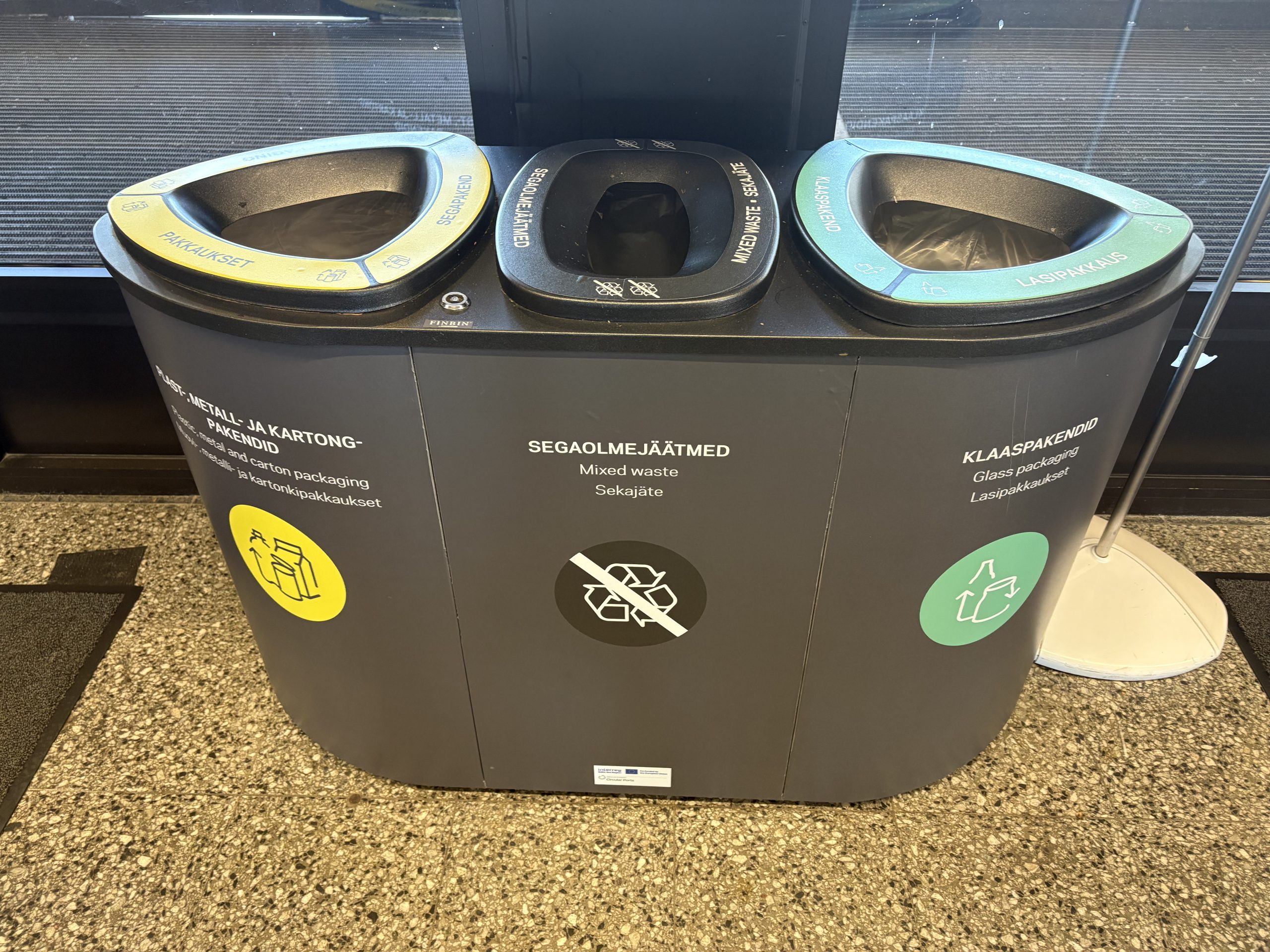
The findings highlighted opportunities to improve the consistency and effectiveness of waste sorting throughout the passenger journey. Key recommendations included introducing common waste categories, harmonised colours and pictograms, clearer multilingual instructions, and better coordination between ports, shipping companies and waste management operators.
The Port of Tallinn also shared examples of improvements already being implemented at its A- and D-terminals, including new multi-compartment waste bins and clearer sorting information.
The guiding principle is simple: passengers should experience the ship and terminal as one continuous environment, with consistent and easy-to-understand waste sorting solutions.
Smart technology to improve recycling
The meeting also explored how innovation and digital solutions could help make waste management more efficient.
Filippo Casellato, CEO and Co-Founder of Italian technology company Etrash, introduced MIDA Smartbin, an AI-powered waste bin that automatically recognises and sorts waste into separate compartments.
In addition to reducing sorting errors, the technology collects data on waste types, quantities and bin fill levels, supporting more efficient collection logistics and data-based sustainability reporting.
The presentation also outlined a potential pilot project at the Port of Tallinn’s D-terminal to test the technology and evaluate its effectiveness in a real passenger terminal environment.
Making cycling between Tallinn and Helsinki easier and safer
Another important topic was sustainable mobility and the potential to encourage more passengers to travel with bicycles.
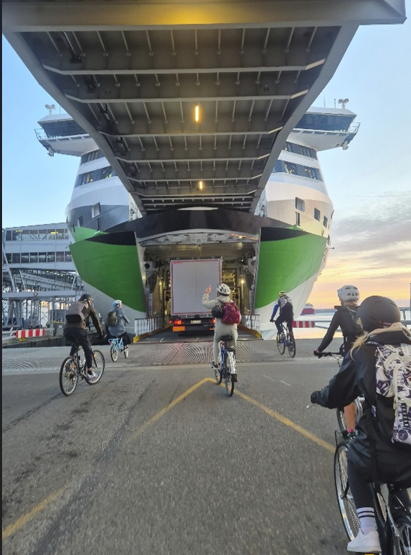
Katrin Arvisto from Tallink Grupp presented the findings of a cycling study trip carried out in September 2026 by representatives of Tallink and the Port of Tallinn. The participants travelled from Tallinn to Helsinki and back with bicycles to experience the entire journey from the cyclist’s perspective.
The study trip demonstrated that travelling between the two cities with a bicycle is already possible, but there is considerable room for improvement.
The main challenges included unclear cycling routes and signage in port areas, potentially unsafe interactions with vehicle traffic, and the need for better coordination between port and ship crews. Improvements to onboard bicycle storage facilities were also identified.
At the same time, the participants highlighted positive experiences, including helpful ship crews, designated bicycle storage areas and good cycling infrastructure connecting parts of the cities to the ports.
The key recommendations focused on four areas: better wayfinding and signage, improved safety and traffic management, enhanced onboard bicycle facilities, and clearer passenger communication.
The next challenge is to translate the ideas and recommendations into coordinated, practical actions that make sustainable choices the easiest and most natural option for passengers travelling between Finland and Estonia.
The FIN–EST Green Corridor continues to provide a valuable platform for turning shared sustainability ambitions into tangible improvements across the Tallinn–Helsinki maritime connection.