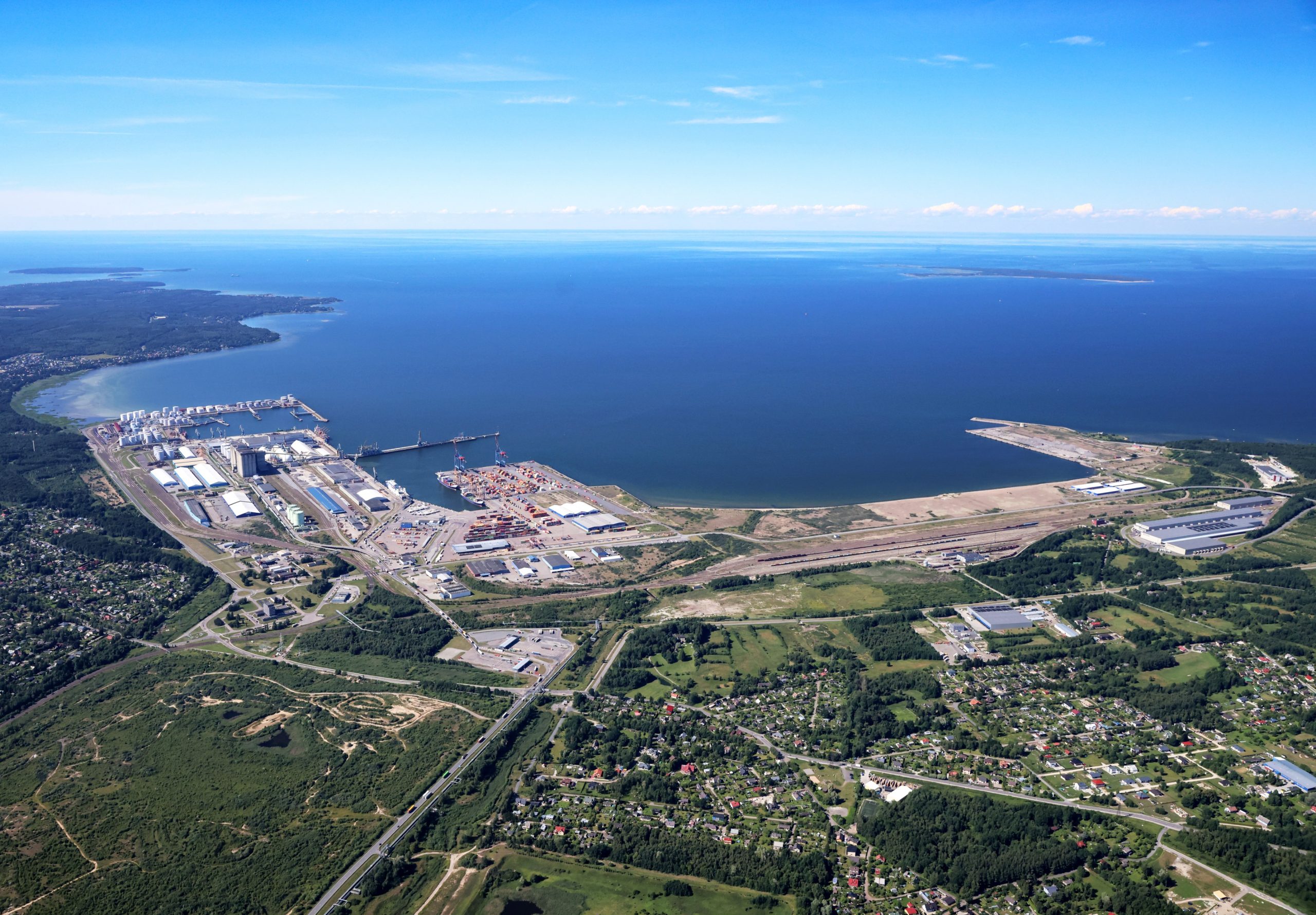
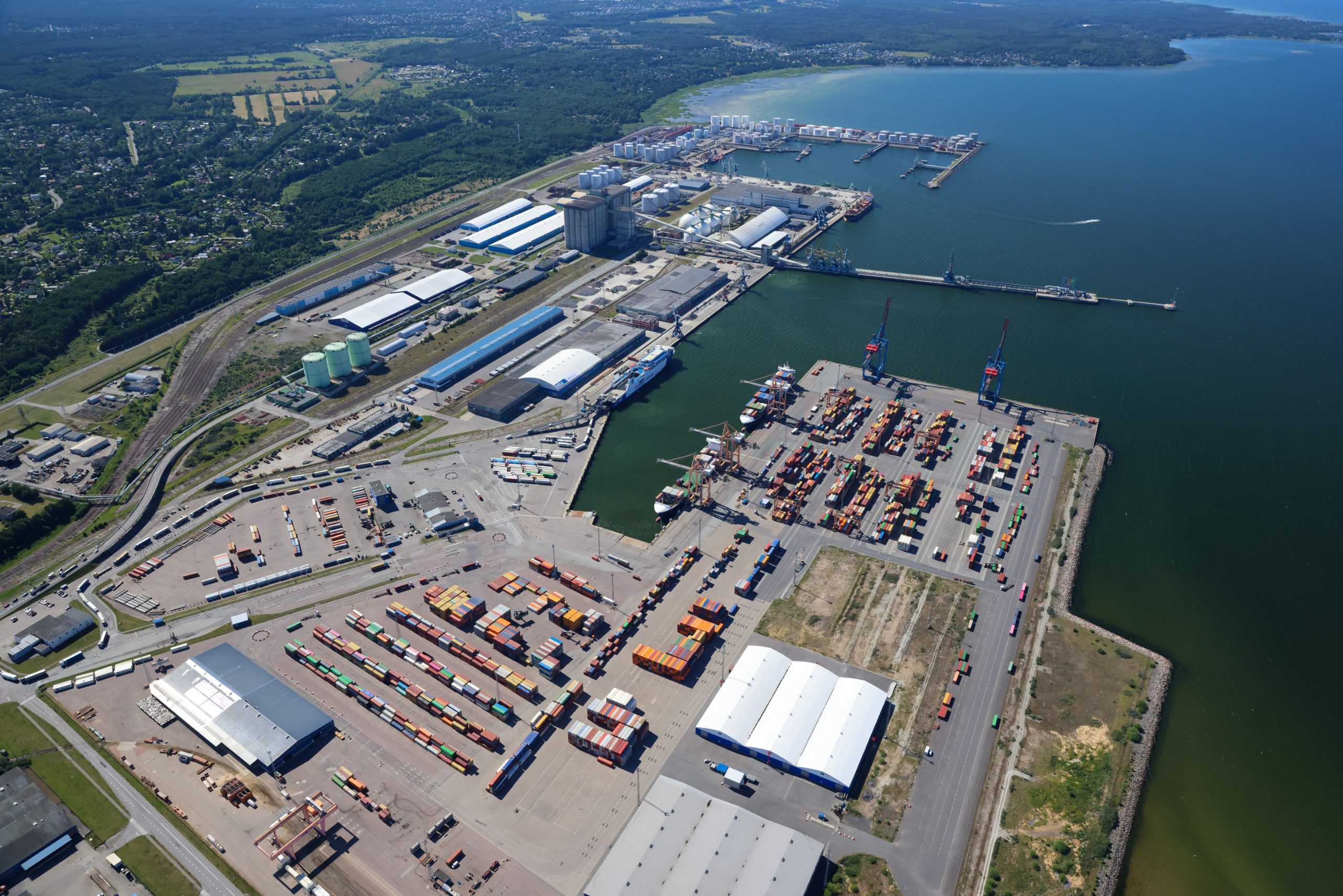
In Tallinn Old City Harbour ships are now served by automated mooring equipment
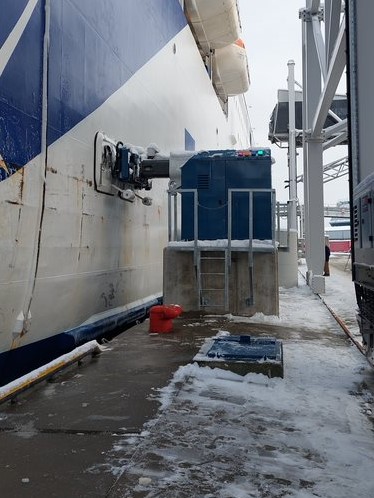
Ships sailing on the Tallinn-Helsinki route are now using automooring equipment when arriving and leaving the Tallinn Old City Harbour. This helps to save time and protect the environment.
„In the traditional way, ie using mooring lines and bollards, it takes linemen ten or more minutes to help the ship moor at the quay, but with the vacuum automooring equipment, the same process takes less than two minutes, and we measure the time in seconds when the ship is released. The whole system is remotely controlled and can only be operated by the captain,“ described Peeter Nõgu, Port of Tallinn’s chief infrastructure officer.
Saving time also leads to environmental protection. “As the ship spends less time maneuvering at the quay, it can sail a bit slower. Even the 5 minutes of saved travel time reduces the ship’s fuel consumption and emissions. In the long run, it will have a significant environmental impact,” explained Nõgu.
The new vacuum automooring equipment was installed on the quays serving the Tallinn-Helsinki route. Quays 5 and 12 were equipped with the company’s Cavotec equipment, quay 13 with Trelleborg equipment. The devices are similar in terms of their technical parameters.
The CEO of Cavotec Mikael Norin said: “We are extremely proud that our MoorMaster systems are now supporting Port of Tallinn in their ambitious plans to improve sustainability and air quality and becoming the most innovative port on the shores of the Baltic Sea. By saving time mooring and releasing, our automated vacuum mooring solution enables faster turnaround of vessels. The time saved in port reduces harmful emissions in Tallinn’s city center equal to some 10,000 diesel cars and lets the vessels cruise slower to Helsinki, thereby reducing up to 12,000 tonnes of carbon emissions per year.”
Automatic mooring devices are reliable and can be used in practically all weather conditions. Only the wind limit of 17 m / s has to be taken into account, and even in circumstances where the wind blows perpendicular to the outer edge of the ship. In this case, the mooring lines of the vessel shall also be used to ensure safety.
The nearest similar devices are located in the Helsinki West Harbour, the Port of Marienhamn and the Port of Langnas in Åland.
The new mooring systems were installed in the framework of TWIN-PORT 3 project and are being co-financed by the EU Connecting Europe Facility (CEF). It is a collaboration project between ferry operators (Tallink, Viking Line and Eckerö Line), the ports of Tallinn and Helsinki and the City of Helsinki for the years 2018-2023 with a total budget of 61.2 million euros. Port of Tallinn invested a total of 15.8 million euros within the project.
Vanasadama reisiterminalide juures on võimalik reisijate
pealevõtmiseks ja mahapanekuks lühiajaliselt tasuta parkida –
selleks on nii A- kui D-terminali juures Kiss&Sail parklad.
Kiss&Sail parklad on kasutamiseks nii erasõidukitele, mittelepingulistele
taksodele kui ka sõidujagamis-app’ide sõidukitele (Bolt, Uber, Yandex jne).
Otse terminali uste ette pääsevad vaid lepingulised taksod (Tallink, Tulika).
Terminalide ees on lubatud lühiajaliselt parkida ainult bussidel.
Cookie Consent
Kasutame küpsiseid veebilehe turvaliseks toimimiseks ja mugavamaks kasutamiseks. Vajalikud küpsised on alati aktiivsed. Analüütilisi küpsiseid kasutame ainult teie nõusolekul. Vaata meie küpsiste poliitikat.
Küpsiste seadistused
Muuda oma küpsiste seadistusi:
Essential cookies enable basic functions and are necessary for the proper function of the website.
Name
Description
Duration
Cookie Preferences
This cookie is used to store the user's cookie consent preferences.
30 days
CloudFlare provides web performance and security solutions, enhancing site speed and protecting against threats.
The cf_use_ob cookie informs Cloudflare to fetch the requested resource from the Always Online cache on the designated port. Applicable values are: 0, 80, and 443. The cf_ob_info and cf_use_ob cookies are persistent cookies that expire after 30 seconds.
session
__cfwaitingroom
The __cfwaitingroom cookie is only used to track visitors that access a waiting room enabled host and path combination for a zone. Visitors using a browser that does not accept cookies cannot visit the host and path combination while the waiting room is active.
session
cf_chl_rc_i
These cookies are for internal use which allows Cloudflare to identify production issues on clients.
session
cf_chl_rc_ni
These cookies are for internal use which allows Cloudflare to identify production issues on clients.
session
cf_chl_rc_m
These cookies are for internal use which allows Cloudflare to identify production issues on clients.
session
__cfruid
Used by the content network, Cloudflare, to identify trusted web traffic.
session
__cf_bm
Cloudflare's bot products identify and mitigate automated traffic to protect your site from bad bots. Cloudflare places the __cf_bm cookie on End User devices that access Customer sites that are protected by Bot Management or Bot Fight Mode. The __cf_bm cookie is necessary for the proper functioning of these bot solutions.
session
__cflb
When enabling session affinity with Cloudflare Load Balancer, Cloudflare sets a __cflb cookie with a unique value on the first response to the requesting client. Cloudflare routes future requests to the same origin, optimizing network resource usage. In the event of a failover, Cloudflare sets a new __cflb cookie to direct future requests to the failover pool.
session
_cfuvid
The _cfuvid cookie is only set when a site uses this option in a Rate Limiting Rule, and is only used to allow the Cloudflare WAF to distinguish individual users who share the same IP address.
session
cf_clearance
Whether a CAPTCHA or Javascript challenge has been solved.
session
__cfseq
Sequence rules uses cookies to track the order of requests a user has made and the time between requests and makes them available via Cloudflare Rules. This allows you to write rules that match valid or invalid sequences. The specific cookies used to validate sequences are called sequence cookies.
session
cf_ob_info
The cf_ob_info cookie provides information on: The HTTP Status Code returned by the origin web server. The Ray ID of the original failed request. The data center serving the traffic
session
These cookies are needed for adding comments on this website.
Name
Description
Duration
comment_author
Used to track the user across multiple sessions.
Session
comment_author_email
Used to track the user across multiple sessions.
Session
comment_author_url
Used to track the user across multiple sessions.
Session
WPForms is a user-friendly WordPress plugin for creating custom forms with drag-and-drop functionality.
Name
Description
Duration
wpfuuid
Used to track user interactions with forms.
11 years
Statistics cookies collect information anonymously. This information helps us understand how visitors use our website.
Google Analytics is a powerful tool that tracks and analyzes website traffic for informed marketing decisions.
Contains information related to marketing campaigns of the user. These are shared with Google AdWords / Google Ads when the Google Ads and Google Analytics accounts are linked together.
90 days
__utma
ID used to identify users and sessions
2 years after last activity
__utmt
Used to monitor number of Google Analytics server requests
10 minutes
__utmb
Used to distinguish new sessions and visits. This cookie is set when the GA.js javascript library is loaded and there is no existing __utmb cookie. The cookie is updated every time data is sent to the Google Analytics server.
30 minutes after last activity
__utmc
Used only with old Urchin versions of Google Analytics and not with GA.js. Was used to distinguish between new sessions and visits at the end of a session.
End of session (browser)
__utmz
Contains information about the traffic source or campaign that directed user to the website. The cookie is set when the GA.js javascript is loaded and updated when data is sent to the Google Anaytics server
6 months after last activity
__utmv
Contains custom information set by the web developer via the _setCustomVar method in Google Analytics. This cookie is updated every time new data is sent to the Google Analytics server.
2 years after last activity
__utmx
Used to determine whether a user is included in an A / B or Multivariate test.
18 months
_ga
ID used to identify users
2 years
_gali
Used by Google Analytics to determine which links on a page are being clicked
30 seconds
_ga_
ID used to identify users
2 years
_gid
ID used to identify users for 24 hours after last activity
24 hours
_gat
Used to monitor number of Google Analytics server requests when using Google Tag Manager
1 minute
Marketing cookies are used to follow visitors to websites. The intention is to show ads that are relevant and engaging to the individual user.
Facebook Pixel is a web analytics service that tracks and reports website traffic.